


Northern Laos Cultural Tour: Luang Prabang, Temples & Caves
Summary
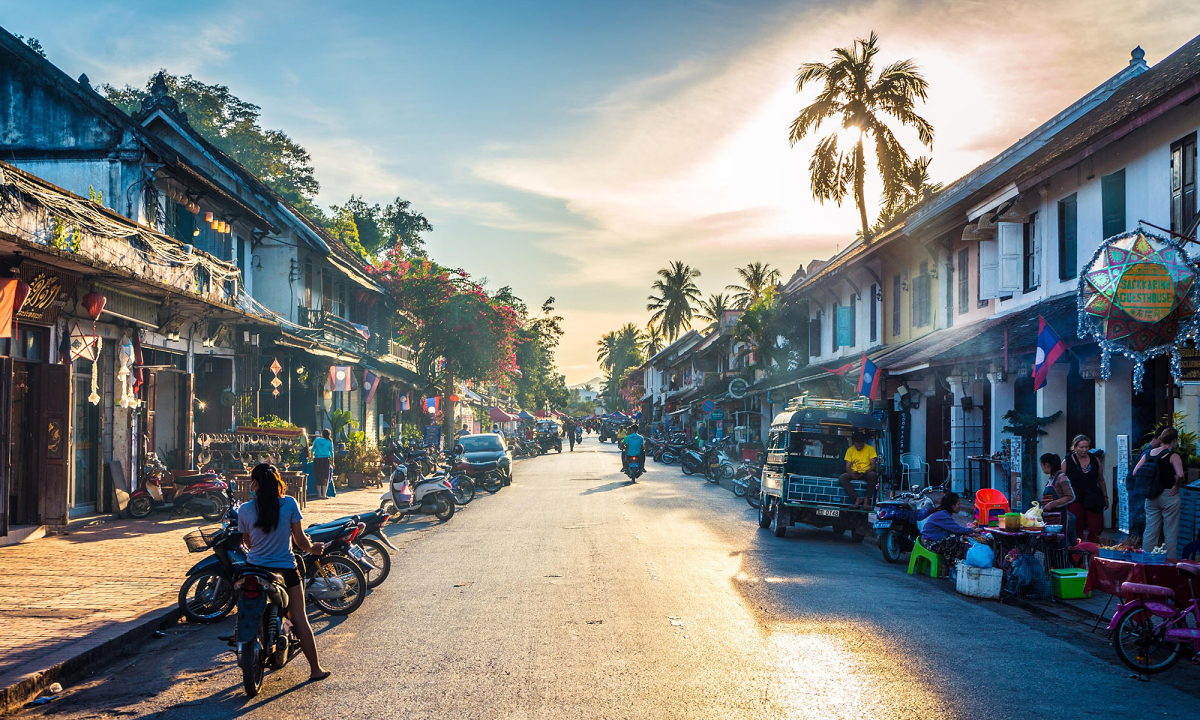
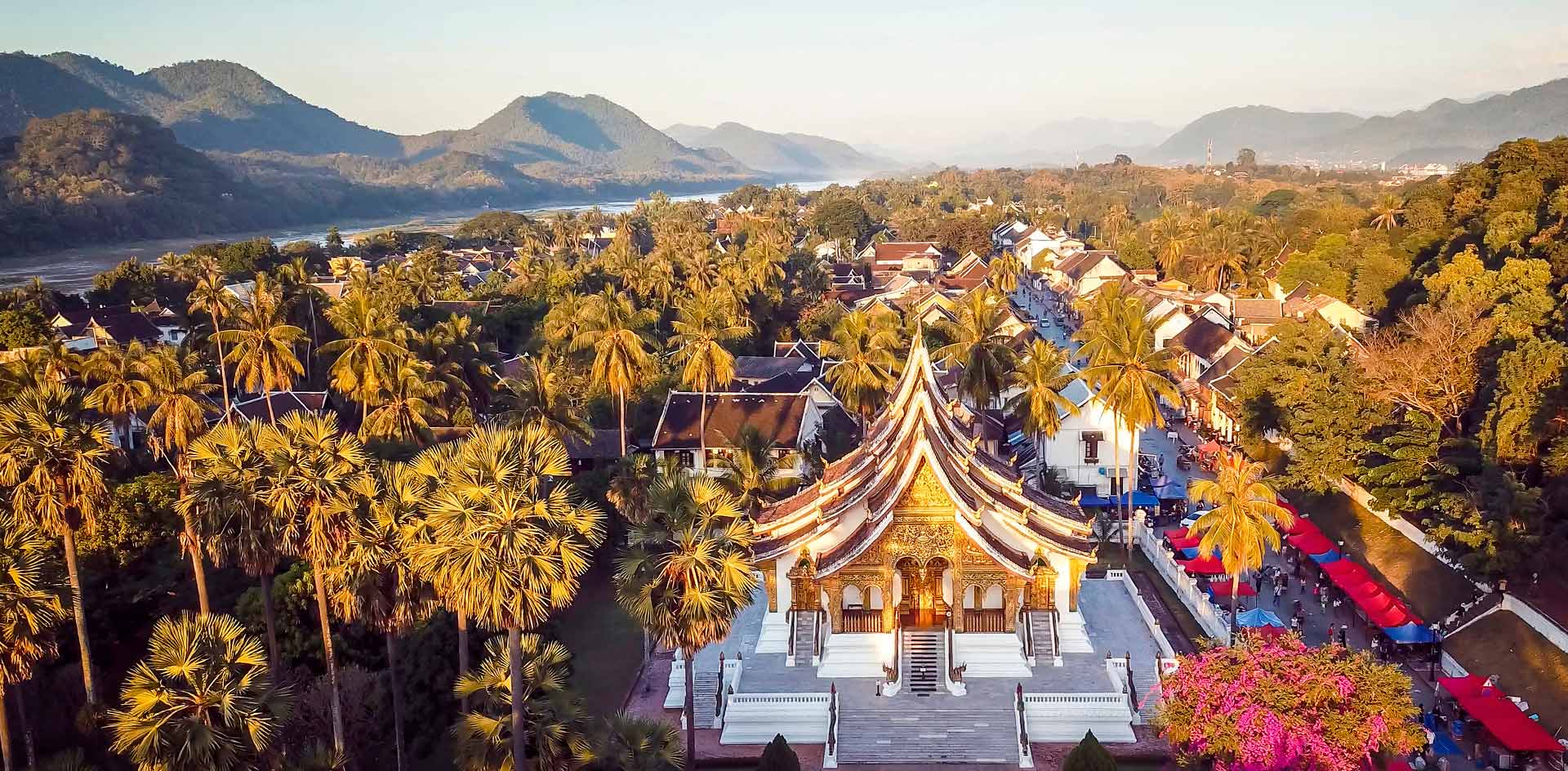
Four days in Luang Prabang move at a considered pace through a city that rewards close attention. The UNESCO-listed old town sits at the confluence of the Mekong and Nam Khan rivers, enclosed by forested ridges that sharpen the sense of remove. The itinerary covers the ceremonial and architectural core of the peninsula on foot and by tuk tuk, then reaches beyond the city to limestone cave shrines on the Mekong and a tiered waterfall in the hills to the south. The program is structured but not dense, allowing each place its proper weight.
Highlights
- Standing at the roadside before dawn as the Tak Baat procession moves through the old town — saffron-robed monks collecting offerings of sticky rice from kneeling residents in a ritual that has continued without interruption for centuries.
- Examining the Beaux-Arts facade and Lao-accented interiors of the former Royal Palace, now a museum that holds the material record of a monarchy abolished in 1975.
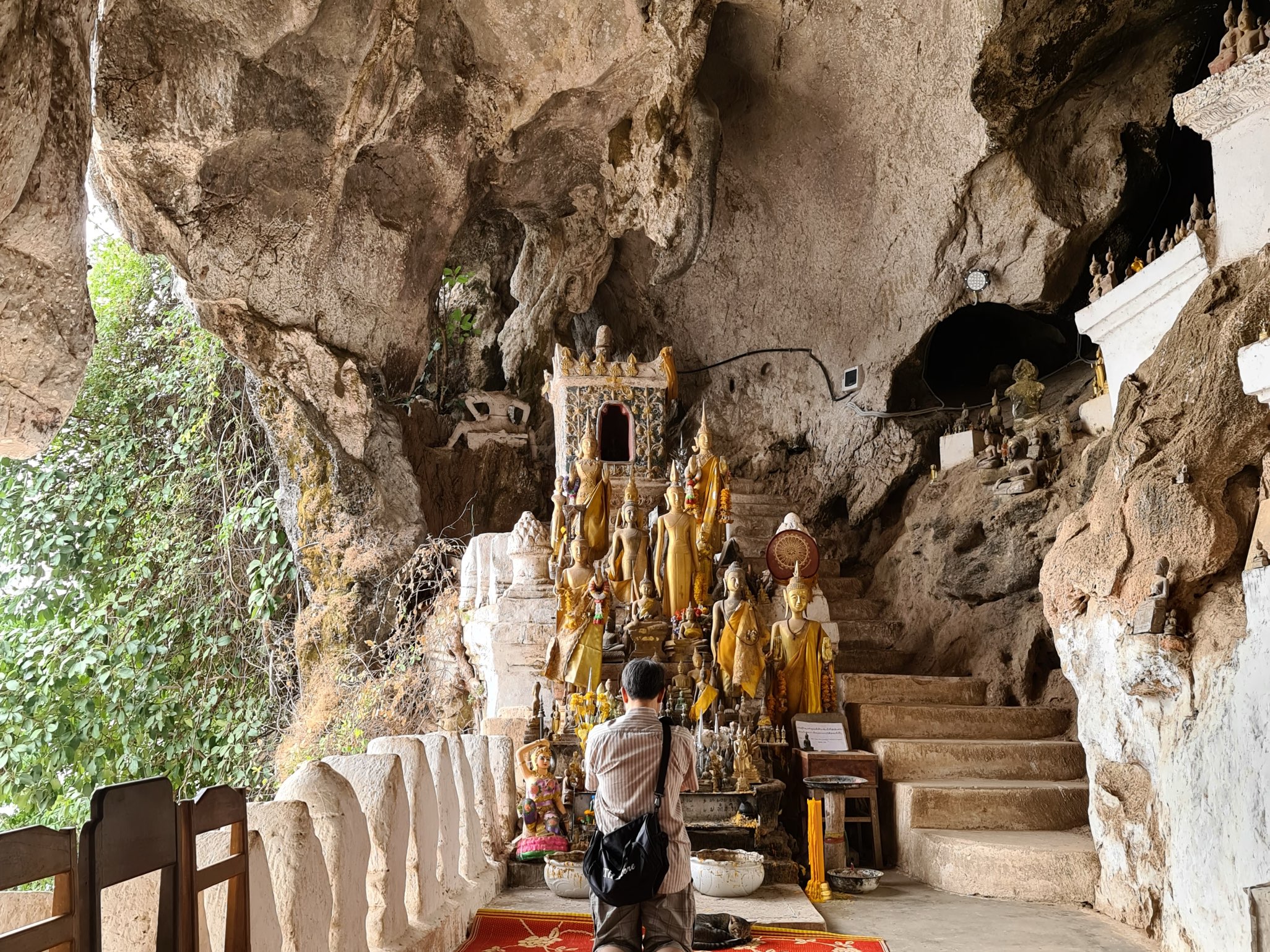
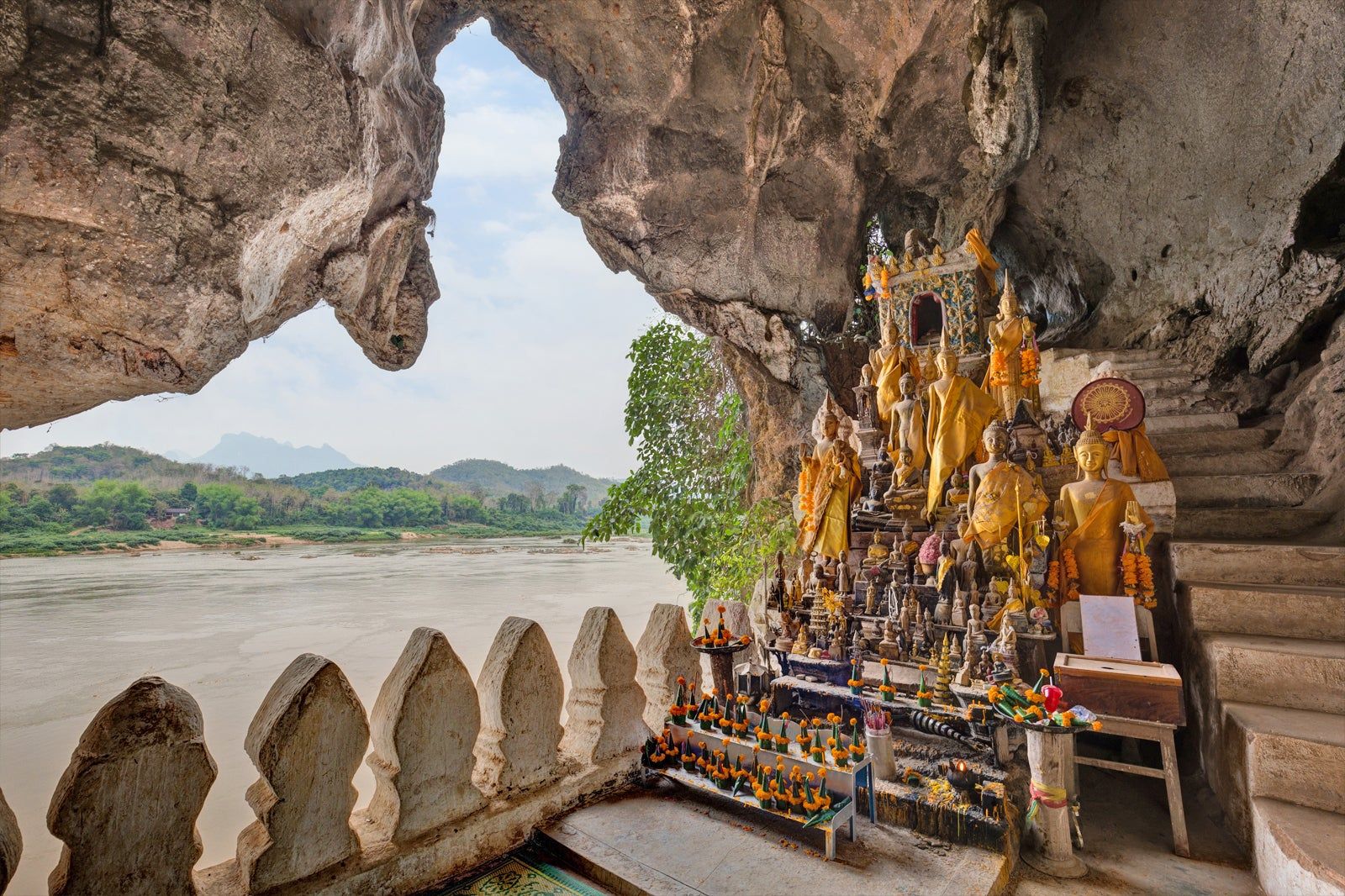
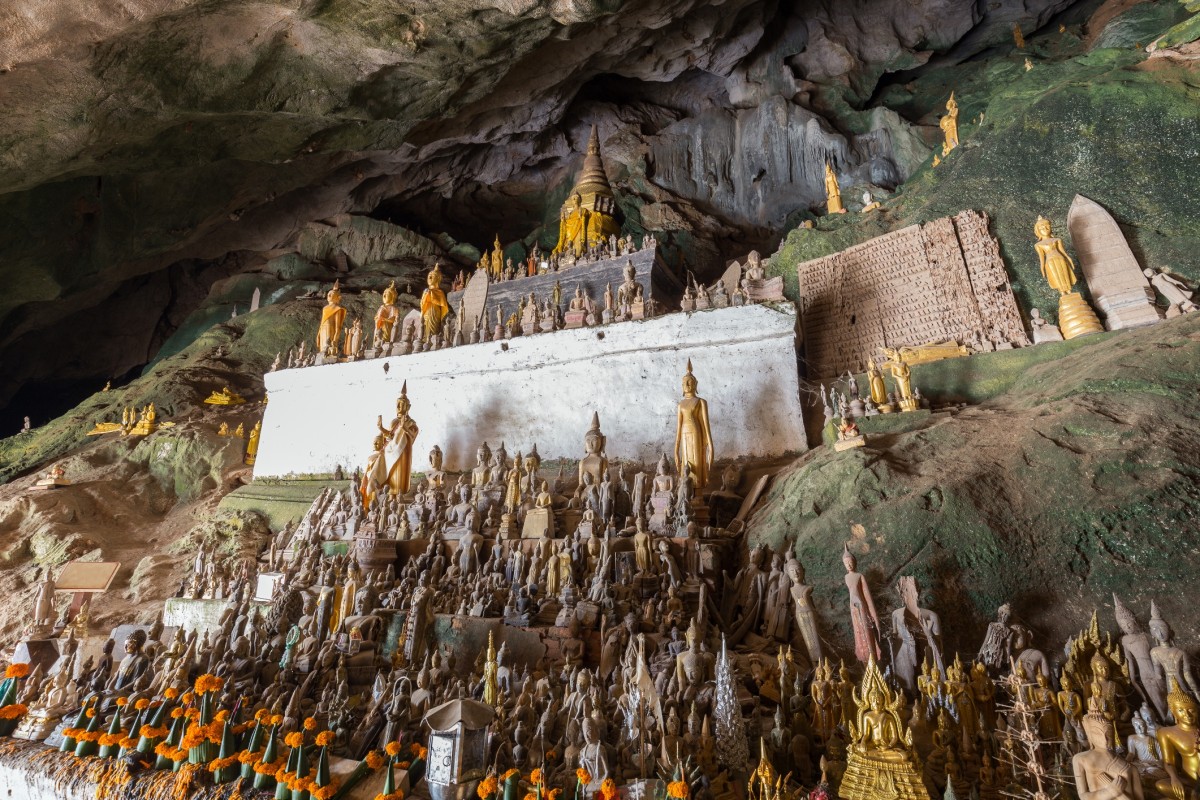
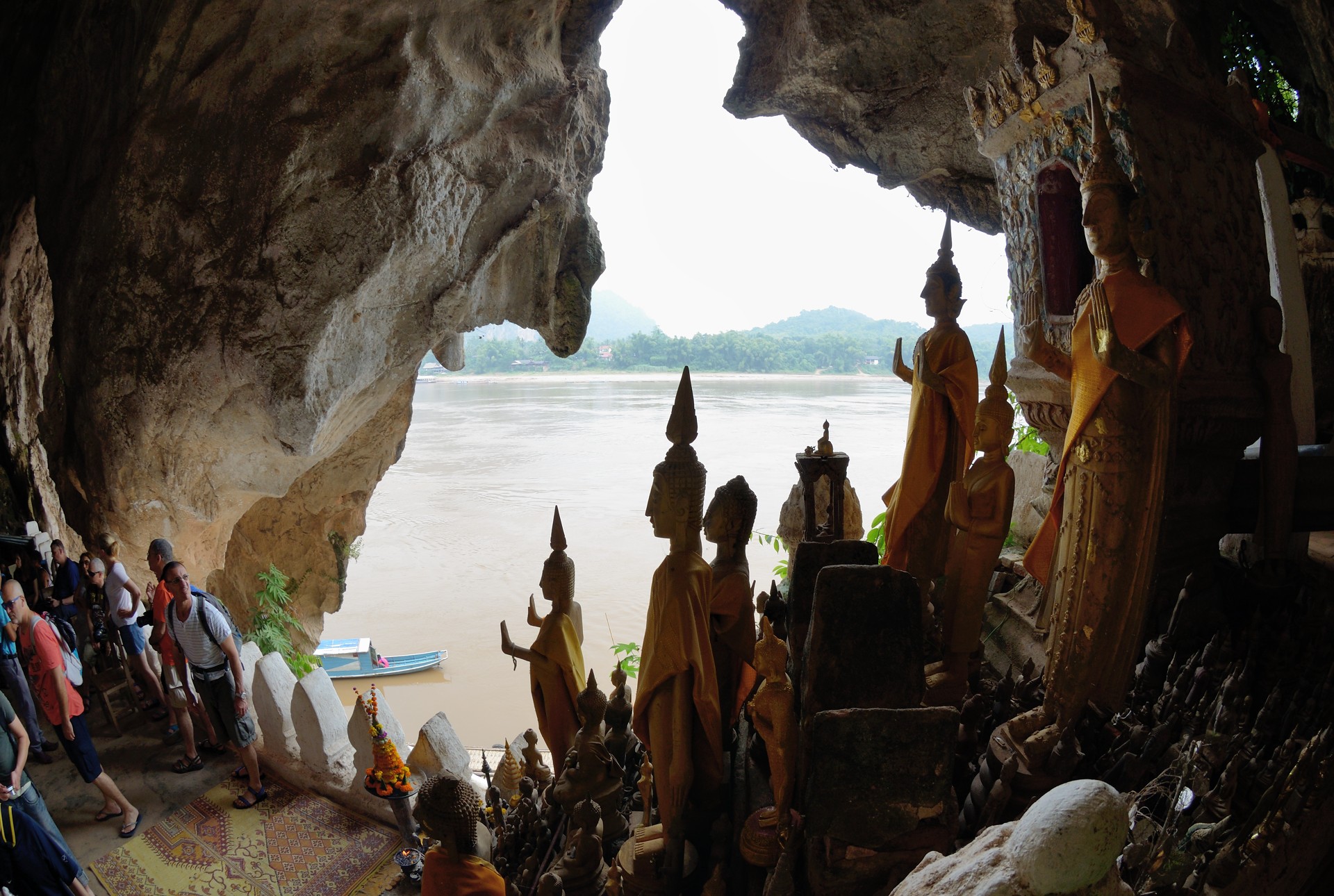
- Approaching Pak Ou by river, the limestone cliff face rising above the Mekong-Nam Ou confluence, its two cave chambers stacked with more than four thousand wooden Buddha figures accumulated over generations of pilgrimage.
- Walking through the grounds of Wat Xieng Thong, the 1559 royal temple that survived the 1887 Black Flag Army invasion intact, its mosaic-covered sim and gilded wood carvings among the finest surviving examples of Luang Prabang craft.
- Ascending Mount Phousi at the close of the afternoon to look out across the temple rooftops, the river bends, and the mountain ranges that define this city's particular geography.
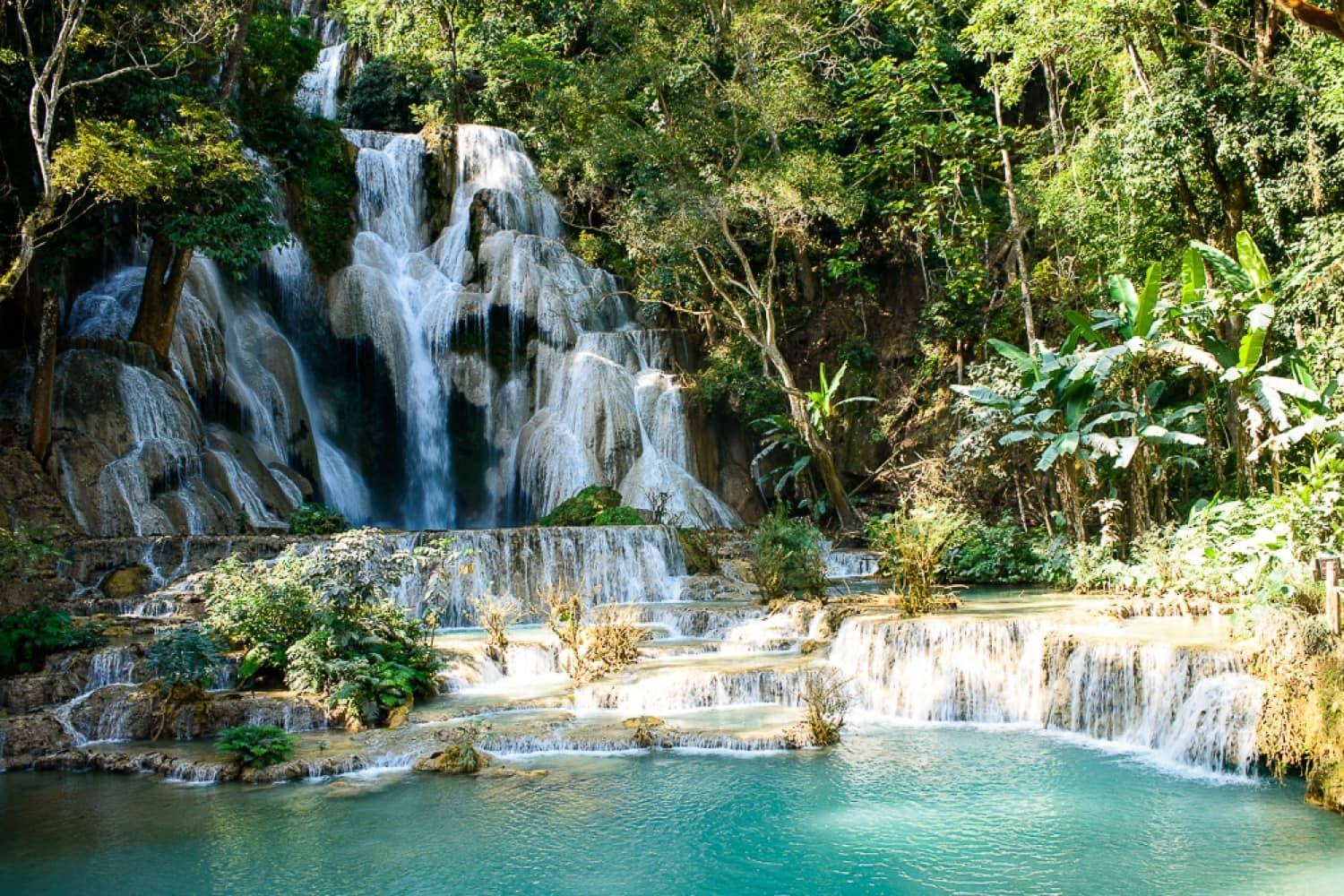
- Pausing at the Bear Rescue Centre within the Kuang Si park, where bears confiscated from the illegal wildlife trade have been rehabilitated since 2003 under a provincial forestry partnership.
What is included in this tour?
Items that are included in the cost of tour price.- All sightseeing as described in program above
- Transportation in private AC vehicles
- Accommodation in hotels (twin shared)
- English-speaking guide
- Admission fees to sights described above
- Meals: B= breakfast, L= lunch, D= dinner
- Lao PDR governmental tax and service charge
- Luggage handling
What is not included in this tour?
Items that are not included in the cost of tour price.- International air tickets to/from Laos
- Visa fee (US $40/pax)
- Travel insurance of any kind
- Meals not mentioned in the itinerary
- Tips, drinks, personal expenses and other expenses not described in the program above
- Single room surcharge on request
Day by day Itinerary
Day 1
Arrival in Luang PrabangThe flight into Luang Prabang descends through mountain terrain before the Mekong comes into view below. A private transfer takes you directly to the hotel. The city asks nothing of you on this first afternoon. Luang Prabang is compact and walkable, and the pace of the streets is immediately quieter than almost anywhere else in the region. The UNESCO designation, awarded in 1995, recognized not just individual monuments but the coherent survival of an urban fabric — French colonial buildings interwoven with temple compounds, the whole of it set on a narrow peninsula between two rivers with mountains closing the horizon on every side. The remainder of the day is unscheduled.
Day 2
The Tak Baat Procession and a Circuit of the Old QuarterAn optional early start at 5.30am brings you to the roadside for Tak Baat, the daily alms-giving procession that moves through the old town at first light. Monks from the city's many temples walk in single file, collecting offerings of sticky rice from residents who kneel along the route. The practice is one of the more intact expressions of Theravada Buddhist daily life remaining in Southeast Asia, and the procession has a composure that is best observed quietly and from a respectful distance.
The main touring day begins at 8.30am by tuk tuk. The three-wheeled motorized rickshaws have been a fixture of Lao transport for decades and provide an open, unhurried way to move between the old town's sites. The first stop is the morning market, where produce arrives daily from surrounding villages and farms rather than from centralized distribution — vendors sell river fish, foraged greens, and seasonal fruits that vary with what the landscape is currently yielding.
A short walk from the market stands Wat Mai Suwannaphumaham, founded around 1780 and distinguished by its exterior veranda covered in gilded bas-relief panels depicting scenes from the Ramayana and the life of the Buddha. The interior lacquerwork in black, red, and gold is among the most detailed in the city. Nearby, the former Royal Palace — designed in French Beaux-Arts style with Lao decorative elements integrated throughout — was converted into a public museum in 1995 following careful renovation. It holds royal regalia, diplomatic gifts, and Lao artifacts that together document the country's history up to the end of the monarchy in 1975. Within the palace grounds, the chapel of Hor Phra Bang was built to house the Phra Bang, the country's most revered Buddha image.
The tuk tuk continues to Wat Visounnalath, founded in 1512 under King Visounnalath and the oldest temple in the city to survive in its original location. Its compound contains the That Mak Mo, a stupa whose rounded form gives it the informal name of the watermelon stupa. The carved wooden window railings inside the sim carry stylistic connections to Wat Phou, the great Khmer-era temple far to the south in Champasak. From there, the route follows the Nam Khan River to Wat Xieng Thong at the tip of the peninsula — a royal foundation of 1559 that escaped the destruction of the 1887 Black Flag Army invasion. Its sim is covered on the exterior with colored glass mosaics, and the compound's funerary chapel houses a gilded royal funeral carriage of exceptional scale and craft.
The day closes on the summit of Mount Phousi, a hill that rises 150 meters above the center of town. The climb takes you up one stairway and down another on the far side. From the top, the view extends across the full breadth of the peninsula — temple rooflines below, both rivers visible, and the encircling mountain ranges holding everything in place. A tuk tuk returns to the hotel at dusk.
Day 3
Pak Ou Caves and Kuang Si WaterfallThe morning departs by private boat upstream on the Mekong, passing limestone karst formations and scattered river settlements before reaching the Pak Ou Caves where the Nam Ou tributary joins the main river. Two cave chambers are set into the cliff face at this confluence: the lower chamber, Tham Ting, is open to natural light, while the upper chamber, Tham Thueng, requires a torch. Together they hold over 4,000 Buddha figures, placed here across many centuries by pilgrims and devout families throughout Laos. The site remains an active place of worship.
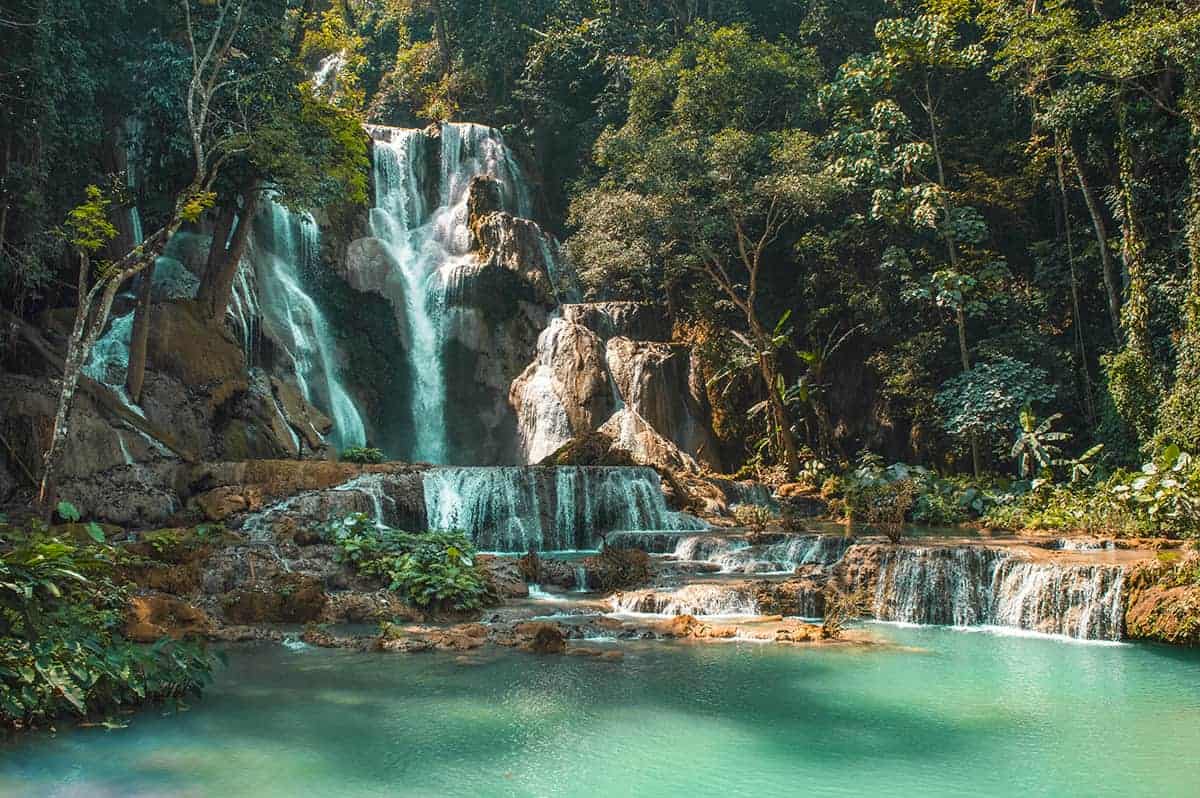
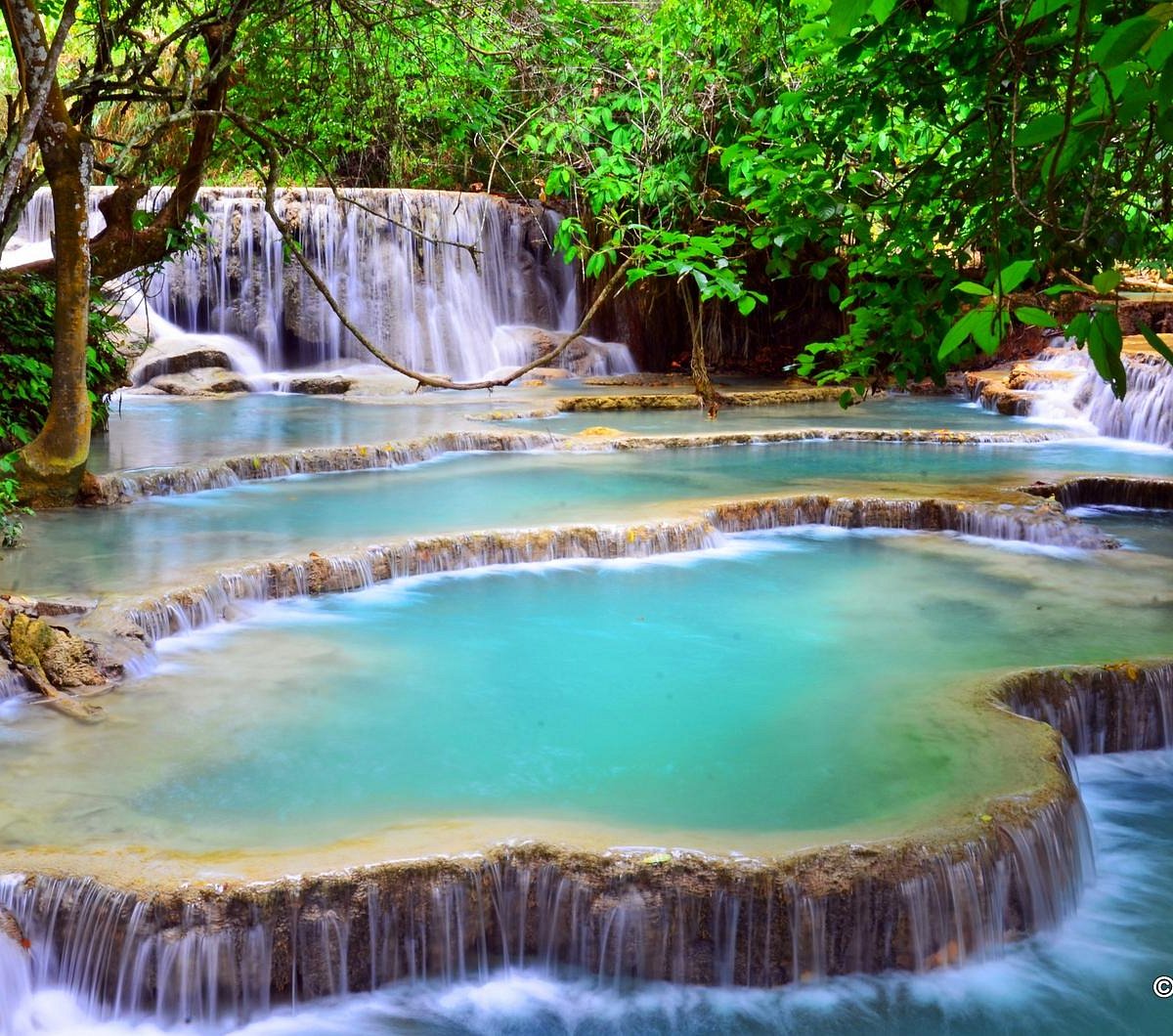
The return journey continues by vehicle into the hills south of the city, stopping at both a Khamu and a Hmong village. These two communities have distinct settlement patterns, agricultural practices, and ceremonial traditions, and your guide draws out the specific differences rather than offering a generalised account. The afternoon is spent at Kuang Si, a tiered waterfall that descends 50 metres through a series of turquoise pools before continuing downstream. The pools are accessible for swimming. Within the park, the Tat Kuang Si Bear Rescue Centre provides a forested sanctuary for sun bears removed from illegal captivity or bile farming operations. The centre has operated since 2003 in partnership with the Luang Prabang Provincial Agriculture and Forestry Office, and the bears move freely through a large forested enclosure.
Day 4
DepartureBreakfast at the hotel. A private transfer takes you to Luang Prabang Airport for your onward flight. Departure timing governs the morning schedule.
